Hard Water Stains on Glass: How to Remove Them With Natural Ingredients
Hard water stains on glass are one of the most stubborn household cleaning problems – that cloudy, chalky buildup on shower doors, windows, and glassware that ordinary cleaning products cannot seem to shift. Furthermore, the longer mineral deposits sit on glass, the harder they become to remove. However, with the right acidic ingredients and a consistent weekly habit, you can restore glass to crystal clarity and keep it that way.
What causes hard water stains on glass
Hard water contains high levels of dissolved calcium and magnesium. Consequently, when water evaporates on a glass surface, these minerals remain behind and bond to the porous surface – forming the white, chalky deposits most people recognize immediately.
Over time, repeated exposure builds up layers of mineral deposit that become increasingly difficult to remove. Moreover, if left too long, minerals can begin to etch the glass surface itself – creating permanent cloudiness that no cleaning product can reverse.
Hard water stains on glass – act before they etch
Light stains that have built up over weeks respond well to home remedies. However, stains that have been present for months may require stronger treatment or professional restoration. Furthermore, the sooner you treat them, the easier and faster the removal.
How to tell if glass is etched vs stained
Run your finger over the cloudy area. If it feels rough or pitted, the glass may be permanently etched and requires professional polishing. If it feels smooth, it is mineral buildup that can be removed with the methods below.
Best natural methods to remove hard water stains on glass
These methods use acidic ingredients to dissolve mineral deposits without scratching or damaging glass surfaces.
1. White vinegar – the most effective method
White vinegar is the most widely tested and consistently effective natural solution for mineral deposits. Its acetic acid dissolves calcium and magnesium bonds directly.
Spray undiluted white vinegar directly onto the stained glass. Leave for 5-10 minutes without allowing it to dry. Scrub gently with a non-scratch pad in circular motions, then rinse with warm water. Furthermore, for stubborn buildup, soak a cloth in vinegar, press it against the glass, and leave for 30 minutes before scrubbing.
2. Baking soda paste
Mix baking soda with just enough water to form a thick paste. Apply to the stained area and leave for 10 minutes. Scrub gently with a damp non-scratch sponge using circular motions, then rinse thoroughly.
Baking soda provides gentle abrasion that physically lifts mineral deposits. Additionally, combining it with vinegar creates a fizzing reaction that loosens stubborn buildup more effectively than either ingredient alone.
Pro tip: Apply vinegar to glass while it is still warm after a shower. Consequently, the warm surface opens the mineral bonds and allows the acid to penetrate more deeply – reducing scrubbing time significantly.
3. Lemon juice spray
Lemon juice contains citric acid – a natural mineral dissolver that is gentler than vinegar and leaves a fresh scent. Spray fresh or bottled lemon juice directly onto glass, leave for 5 minutes, scrub with a soft cloth, and rinse.
Moreover, lemon juice works particularly well on glassware and mirrors where the smell of vinegar would be unpleasant. It is also safe for glass with metal frames that vinegar can corrode over time.
4. Vinegar and baking soda combination
For heavy buildup, use both together. Spray vinegar onto the glass first and allow it to penetrate for 5 minutes. Then sprinkle baking soda directly onto the wet surface – it will fizz immediately.
Scrub immediately while the reaction is active, then rinse with warm water. Furthermore, this combination is the most effective natural treatment for shower doors with months of accumulated mineral buildup.
Removing hard water stains from shower doors and windows
Different glass surfaces require slightly different approaches for best results.
Shower doors – step by step
Spray the entire door with undiluted white vinegar. Leave for 15-30 minutes. Apply baking soda paste to the most affected areas and scrub with a non-scratch pad. Rinse thoroughly with warm water and squeegee dry immediately to prevent new mineral deposits forming.
Additionally, for the rubber seals around the door frame, apply vinegar with an old toothbrush to remove mineral buildup in the grooves.
Windows and exterior glass
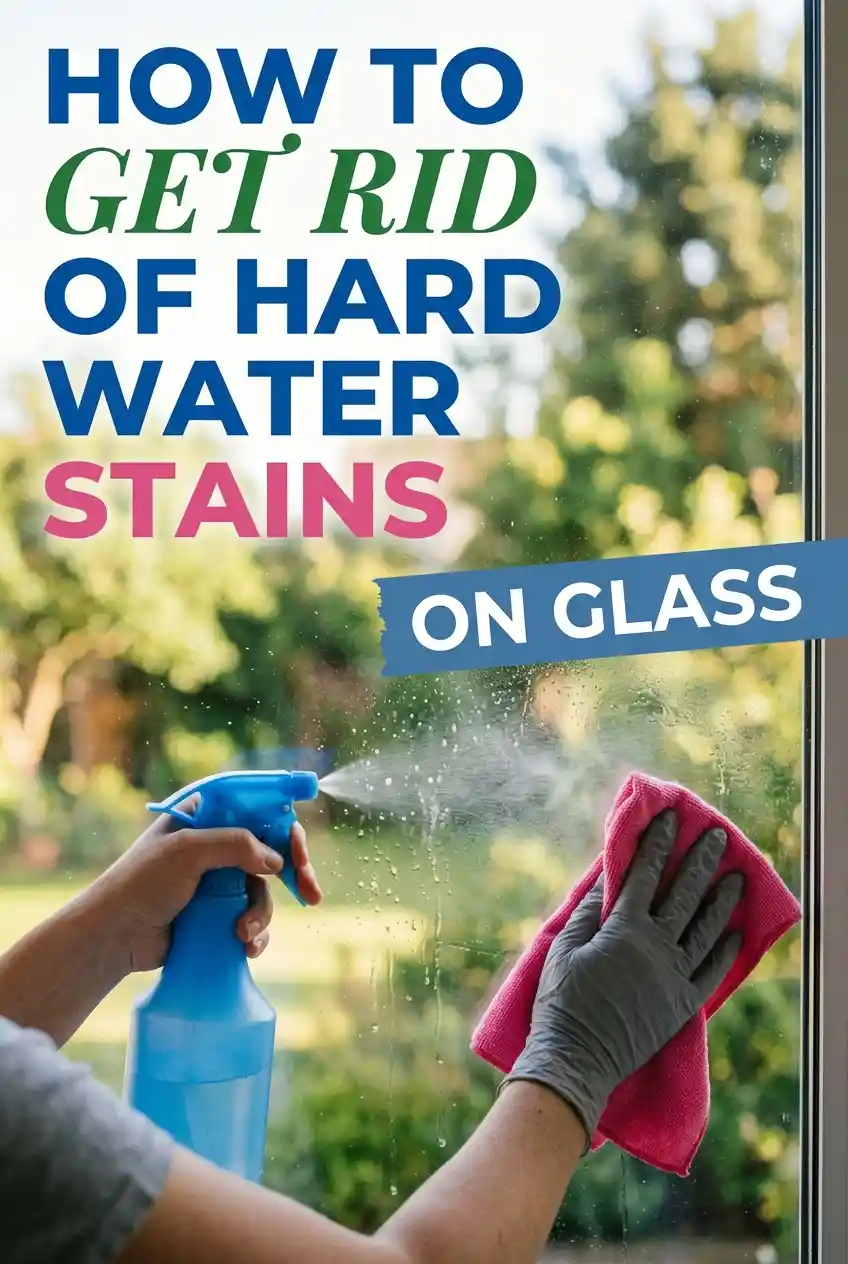
Mix equal parts white vinegar and warm water in a spray bottle. Apply generously and leave for 5-10 minutes. Wipe with a microfibre cloth using horizontal strokes. Consequently, microfibre prevents streaking and lifts dissolved minerals more effectively than regular cloths.
Daily habits that prevent hard water stains on glass
Prevention is far less effort than removal. These habits take under a minute and stop buildup entirely.
After every shower
Squeegee the shower door after every use. This single habit removes water before minerals can deposit. Furthermore, it takes 20 seconds and eliminates the need for deep cleaning almost entirely.
Weekly vinegar spray. A quick vinegar spray on shower glass once a week prevents mineral buildup from establishing. Moreover, leave it on – no rinsing needed for weekly maintenance.
Apply a rain repellent product. Car windscreen rain repellent applied to shower glass creates a hydrophobic coating that causes water to bead and run off rather than evaporate on the surface. Consequently, mineral deposits cannot form.
How often to deep clean glass
With daily squeegeeing and weekly vinegar maintenance, a deep clean is only needed once a month. Without these habits, buildup requires deep cleaning every one to two weeks. Furthermore, the daily squeegee habit alone reduces cleaning time by over 80% compared to no prevention.
Hard water stains on glass respond to consistent acidic treatment and good prevention habits. Start with a 30-minute vinegar soak on your shower door today, then squeegee after every shower from now on. Furthermore, a weekly vinegar spray takes 30 seconds and prevents buildup entirely. Crystal clear glass is not about expensive products – it is about doing the right small things consistently.