How to Get Rid of Flies Naturally: 8 Home Remedies That Actually Work
The best way to get rid of flies naturally does not require chemical sprays or expensive products. Furthermore, most effective fly remedies use ingredients already in your kitchen. These eight methods repel flies, trap them, and prevent them from returning – all without toxic chemicals.
Why flies enter your home and how to get rid of flies
Flies are attracted to rotting food, garbage, standing water, and warm indoor temperatures. Consequently, removing these attractants is the most important first step before any repellent or trap will work effectively.
The most common entry points are gaps around windows and doors, open drains, and uncovered food. Moreover, flies reproduce rapidly – a single female lays up to 500 eggs in her lifetime – so acting quickly matters.
Get rid of flies – house flies vs fruit flies
House flies are larger and breed in garbage, animal waste, and decaying matter. Fruit flies are tiny and breed in overripe fruit, fermented liquids, and drains. Furthermore, each type requires a slightly different approach – the traps below work for both, but the prevention habits differ.
Drain flies – a separate problem
If flies appear around sinks and showers, you likely have drain flies breeding in organic buildup inside pipes. Pour boiling water down drains weekly and use a drain brush to remove buildup. Additionally, a baking soda and vinegar flush breaks down the organic matter they breed in.
8 natural remedies to get rid of flies at home
These methods work through repulsion, trapping, and elimination – often faster than chemical alternatives.
DIY fly traps that work
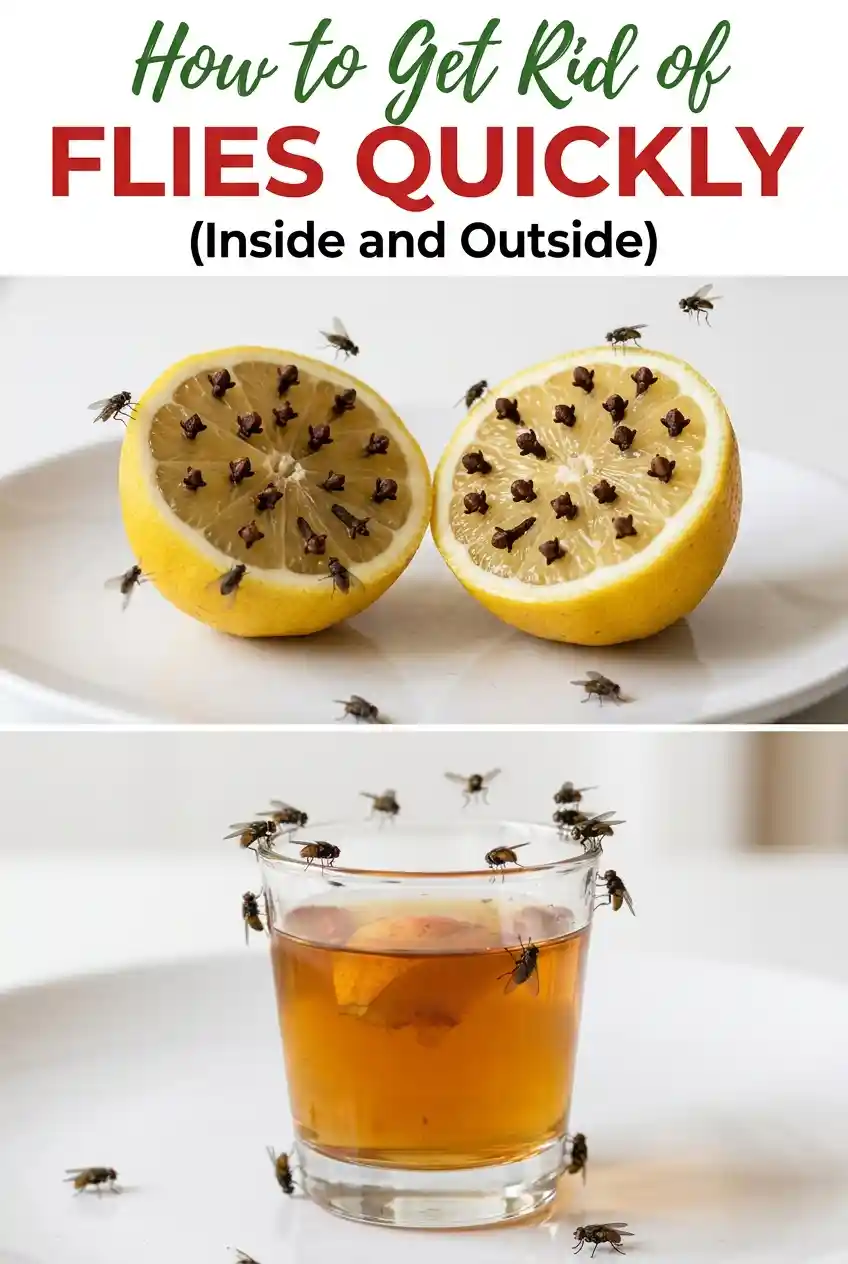
- Apple cider vinegar trap. Fill a glass with apple cider vinegar, add two drops of dish soap, and cover tightly with plastic wrap. Poke small holes in the top. Flies are attracted to the vinegar, enter through the holes, and consequently cannot escape due to the dish soap breaking the surface tension.
2. Red wine trap. Leave an almost-empty bottle of red wine out – flies are strongly attracted to fermented liquid and will fly in and be unable to get back out. Furthermore, this works particularly well for fruit flies and fungus gnats.
3. Sugar water bottle trap. Cut the top off a plastic bottle and invert it into the base to form a funnel. Fill with sugar water. Flies enter through the funnel but cannot find their way back out.
Quick tip: Place traps near windows and garbage areas where flies congregate most. Moreover, replace the liquid every two to three days for maximum effectiveness. Empty and reset the trap rather than adding fresh liquid on top.
Natural repellents that flies hate
- Essential oil spray. Mix 15 drops of peppermint, eucalyptus, or lavender essential oil with 250ml of water in a spray bottle. Spray around windows, doors, and kitchen surfaces. Furthermore, flies find these scents intensely unpleasant and avoid treated areas consistently.
5. Cloves in citrus. Press 10-15 whole cloves into a halved lemon or orange and place on a plate. Consequently, the combination of citrus and clove oil creates a powerful natural fly deterrent that works for up to a week.
6. Cayenne pepper spray. Mix one teaspoon of cayenne pepper with 250ml of water and spray around entry points. Additionally, flies avoid capsaicin strongly – this works well around door frames and window sills.
7. Fresh herbs. Basil, lavender, mint, and rosemary naturally repel flies. Place pots on windowsills and near entry points. Moreover, they smell wonderful and look attractive while working as a continuous passive deterrent.
Daily habits that prevent flies from returning
Traps and repellents work better when combined with these consistent prevention habits.
8. Keep food and waste covered
Cover all food immediately after preparation and store fruit in the refrigerator during fly season. Use bins with tight-fitting lids and take rubbish out daily. Furthermore, wipe down kitchen surfaces after every meal – even tiny food residues attract flies within hours.
Wash dishes immediately rather than leaving them to soak. Additionally, clean up pet food bowls after feeding and avoid leaving standing water in sinks, plant saucers, or buckets.
How to get rid of flies outside and at entry points
Outdoor fly control is the most effective way to prevent indoor infestations before they start.
Outdoor prevention methods
Plant repellent herbs around entry points. Basil and lavender near doorways create a natural barrier that reduces the number of flies attempting to enter.
Install fly screens. Mesh screens on windows and doors are the single most effective physical barrier. Moreover, ensure they fit tightly with no gaps around the edges.
Turn off outdoor lights at night. Flies and other insects are attracted to bright lights after dark. Consequently, switching to yellow-tinted outdoor bulbs or motion-sensor lights significantly reduces nighttime fly attraction.
When home remedies are not enough
If a fly infestation persists despite all home remedies, check for hidden breeding sources – compost bins, rotting wood, standing water under sinks, or a dead animal in the roof or walls. Furthermore, a professional pest control visit may be needed for severe or recurring infestations.
Getting rid of flies naturally is about combining traps, repellents, and prevention habits consistently. Start with the apple cider vinegar trap today and an essential oil spray around entry points. Furthermore, cover all food, empty bins daily, and plant basil near windows. These habits together create an environment where flies cannot thrive – no chemicals needed.