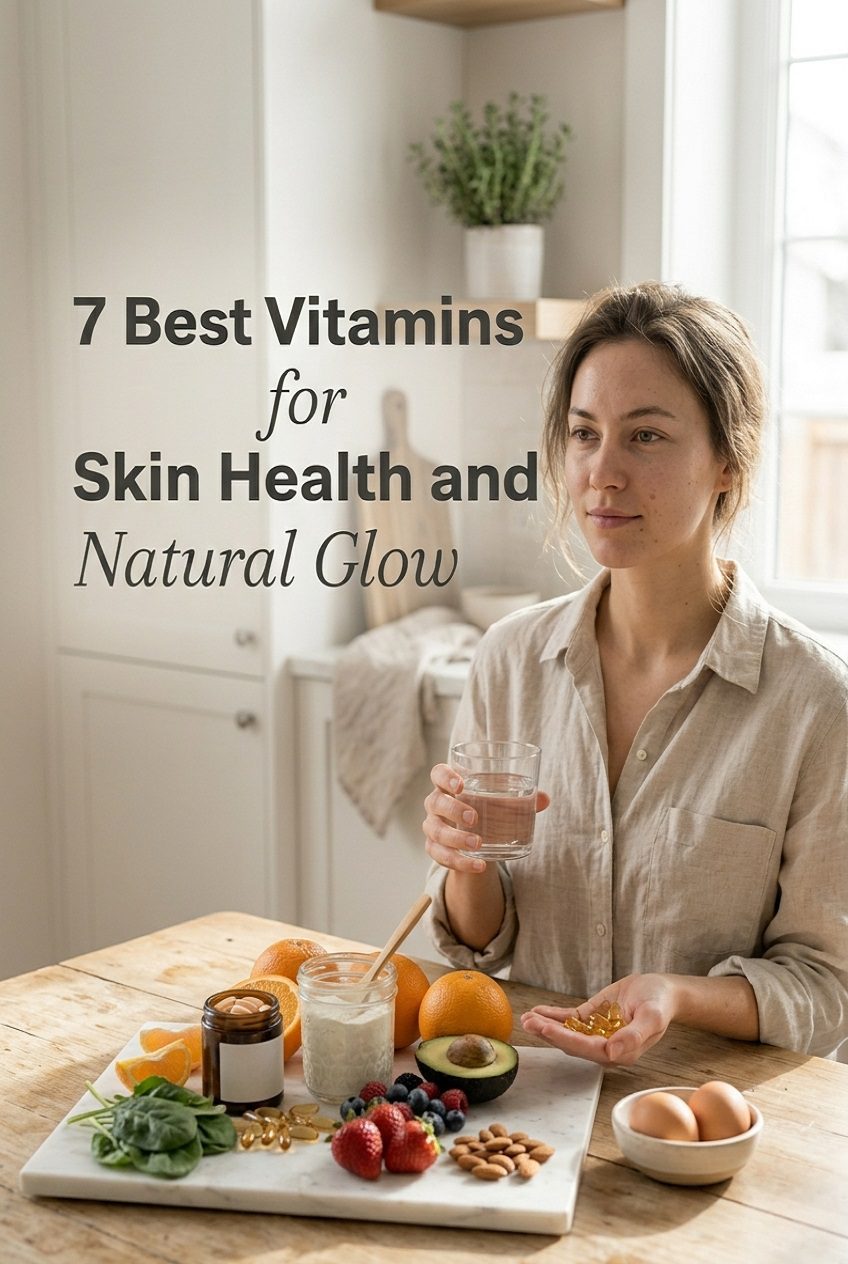
7 Best Vitamins for Skin Health and Natural Glow
If you’ve been searching for the secret to glowing, healthy skin, the answer might already be missing from your plate. The right vitamins for skin health can transform dull, tired skin into something radiant — reducing wrinkles, evening out skin tone, and strengthening your skin’s natural barrier. Here are the seven most powerful vitamins for skin health that dermatologists and nutritionists recommend most.
Vitamins for skin health — what science says
Most people invest heavily in creams, serums, and moisturizers — but skincare products can only do so much from the outside. True skin health starts from within. When your body is deficient in key vitamins, the signs show up on your skin first: dryness, breakouts, uneven tone, and premature aging. Feeding your skin the nutrients it needs is the most powerful and long-lasting approach to a natural glow.
1. Vitamin C — the glow-booster from the vitamins for skin health list
Vitamin C is one of the most researched and celebrated nutrients for skin. It is essential for collagen production — the protein that keeps skin firm, plump, and youthful. Without enough Vitamin C, collagen breaks down faster, leading to sagging and wrinkles. It also works as a powerful antioxidant, neutralizing the free radicals caused by sun exposure and pollution that accelerate skin aging. You can get Vitamin C from citrus fruits, strawberries, kiwi, bell peppers, and broccoli — or through a daily supplement. Applying it topically in a serum alongside dietary intake gives the best results.
2. Vitamin E — the skin protector
Vitamin E is a fat-soluble antioxidant that works closely with Vitamin C to protect skin cells from oxidative damage. It helps repair and maintain the skin’s natural moisture barrier, making it especially valuable for people with dry or sensitive skin. Vitamin E also helps reduce the appearance of scars and dark spots over time. Rich dietary sources include almonds, sunflower seeds, avocado, and spinach. When used topically, Vitamin E oil is a popular overnight treatment for dry patches and rough skin texture.
3. Vitamin A — the anti-aging essential
Vitamin A is the parent compound of retinol — one of the most proven anti-aging ingredients in dermatology. It stimulates cell turnover, encouraging new skin cells to replace old, damaged ones. This process reduces the appearance of fine lines, hyperpigmentation, and acne. Dietary Vitamin A comes in two forms: preformed Vitamin A from animal sources like liver and eggs, and beta-carotene from plant sources like sweet potatoes, carrots, and leafy greens. The body converts beta-carotene into Vitamin A as needed, making it a safe way to boost your intake naturally.
Pro tip: what are the best vitamins for skin health?
Getting vitamins through whole foods is always better than supplements alone. Focus on a colorful, varied diet first — then consider supplements to fill specific gaps.
4. Vitamin D as part of most important vitamins for skin health — the sunshine vitamin
Vitamin D plays a crucial role in skin cell growth and repair. Low Vitamin D levels have been linked to skin conditions like eczema, psoriasis, and increased acne. Your skin actually produces Vitamin D when exposed to sunlight — but most people in modern, indoor lifestyles are deficient. Foods like fatty fish, egg yolks, and fortified dairy provide small amounts, but a daily supplement of 1000–2000 IU is often recommended, especially in winter months or for people who spend little time outdoors.
5. Vitamin K — the dark circle fighter
Vitamin K is less talked about than the others, but it plays a unique and important role in skin health. It helps with blood clotting and the healing of wounds, bruises, and stretch marks. Topically, Vitamin K cream is widely used to reduce dark circles under the eyes and minimize the appearance of spider veins. Dietary sources include leafy greens like kale, spinach, and Brussels sprouts. If you struggle with persistent dark circles or slow-healing skin, Vitamin K could be the missing piece.
6. Biotin (Vitamin B7) — the hair and skin strengthener
Biotin is a B-vitamin best known for its role in hair growth, but its benefits extend deeply to skin health as well. It supports the production of fatty acids that nourish the skin and helps maintain its moisture and elasticity. Biotin deficiency — though rare — can lead to dry, flaky skin, rashes, and brittle nails. Eggs, salmon, nuts, seeds, and sweet potatoes are excellent natural sources. Biotin supplements are widely available and are a popular choice for people looking to improve both skin and hair quality.
7. Niacinamide (Vitamin B3) — the pore minimizer
Niacinamide has become one of the most popular skincare ingredients in recent years — and for good reason. This form of Vitamin B3 reduces enlarged pores, evens out skin tone, softens fine lines, and strengthens the skin barrier. It also has anti-inflammatory properties that make it ideal for acne-prone and sensitive skin types. Niacinamide is found in chicken, tuna, mushrooms, and peanuts. It works exceptionally well both as a dietary nutrient and as a topical serum ingredient, making it one of the most versatile vitamins for skin on this list.
Achieving healthy, glowing skin doesn’t require an expensive skincare routine — it starts with what you put into your body. These seven vitamins for skin health work together to protect, repair, and renew your skin from the inside out. Focus on getting them through a varied, nutrient-rich diet, and consider targeted supplements where needed. Your skin reflects your overall health — nourish it well, and the glow will follow.