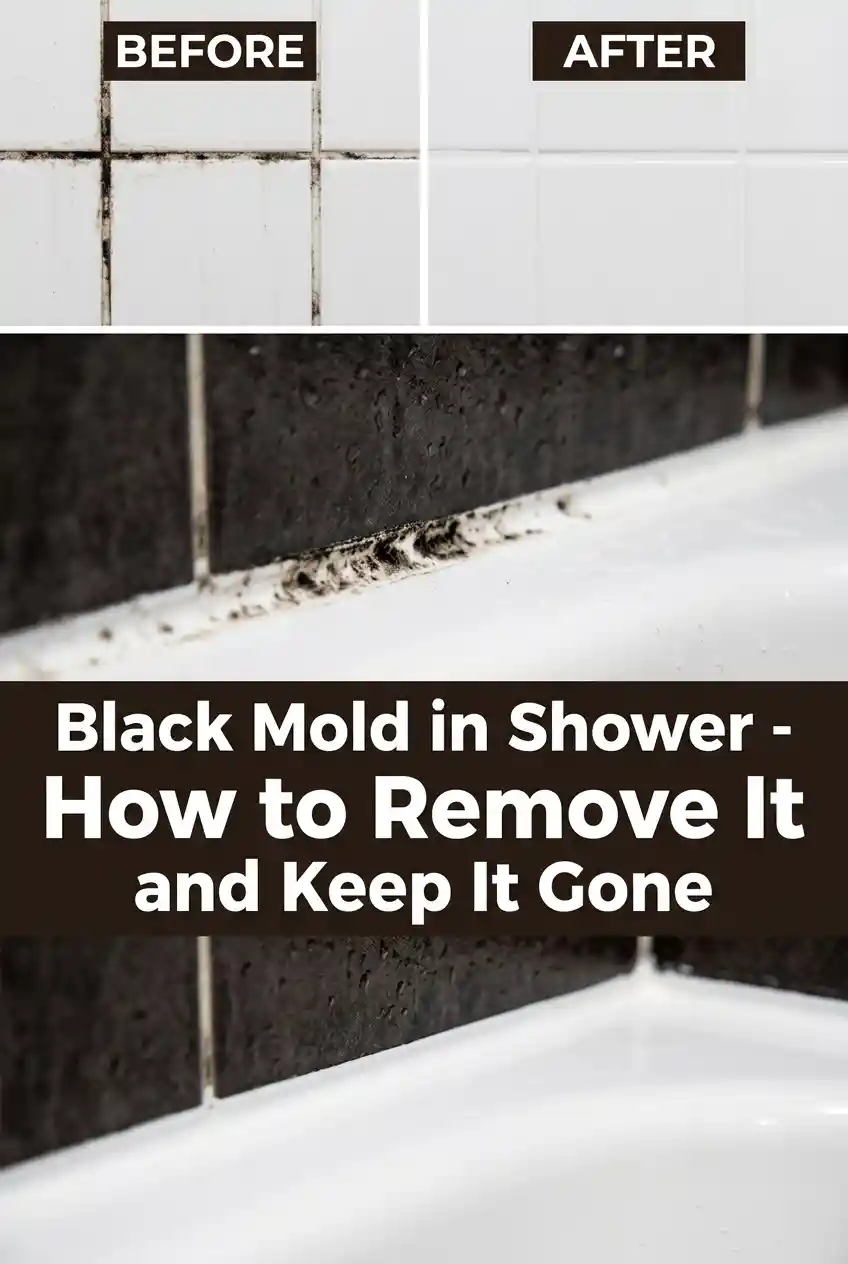
Black Mold in Shower: How to Remove It and Keep It Gone for Good
Black mold in shower grout, caulking, and corners is one of the most common household problems – and one of the most persistent. Furthermore, it is not just unsightly. Mold spores can trigger respiratory issues, allergies, and skin irritation. However, with the right approach and consistent daily habits, you can remove it completely and prevent it from growing back.
Why black mold in shower keeps coming back
Showers are the perfect environment for mold – warm, humid, and poorly ventilated. Mold spores settle on grout, caulking, and tile surfaces and begin colonizing within 24-48 hours of moisture exposure.
Consequently, surface cleaning alone rarely solves the problem. The mold penetrates porous grout and caulking and regrows quickly unless both the visible mold and the conditions that cause it are addressed together.
Black mold in shower – health risks to know
Most shower mold is Cladosporium or Aspergillus rather than the more toxic Stachybotrys. However, any mold can cause sneezing, coughing, eye irritation, and skin reactions – particularly in children, the elderly, and those with asthma or allergies. Furthermore, regular mold exposure worsens respiratory conditions over time.
When to call a professional
Call a mold remediation specialist if mold covers more than one square meter, appears inside walls, keeps returning despite treatment, or if household members are experiencing persistent respiratory symptoms.
How to remove black mold in shower grout and caulking
These methods work on grout lines, caulking, tile, and corners. Moreover, always wear gloves and ensure the bathroom is well ventilated before starting.
Natural removal methods
Baking soda paste. Mix baking soda with water to form a thick paste. Apply directly to moldy grout and caulking, leave for 15 minutes, scrub with an old toothbrush, and rinse. Furthermore, baking soda neutralizes odor and inhibits regrowth.
White vinegar spray. Spray undiluted white vinegar directly onto the affected area. Leave for one hour without rinsing. Consequently, the acetic acid kills up to 82% of mold species on contact and penetrates porous surfaces more effectively than bleach.
Tea tree oil solution. Mix 10 drops of tea tree oil with 250ml of water in a spray bottle. Apply to moldy areas and leave overnight without rinsing. Additionally, tea tree oil has antifungal properties that prevent regrowth after treatment.
Hydrogen peroxide. Apply 3% hydrogen peroxide directly to mold. Leave 10 minutes, scrub, and rinse. It is effective on grout and tile without the harsh fumes of bleach.
Pro tip: For deep mold in caulking that does not respond to cleaning, remove the old caulking entirely with a caulk remover tool. Furthermore, apply fresh mold-resistant caulking after the area is completely dry. This is the most permanent solution for caulking mold.
Stronger methods for stubborn mold
For persistent or widespread shower mold, a diluted bleach solution works quickly. Mix one part bleach with ten parts water in a spray bottle. Apply to affected areas, leave 10-15 minutes, scrub, and rinse thoroughly.
Moreover, never mix bleach with vinegar or other cleaners – the combination produces toxic chlorine gas. Use one method at a time and rinse between treatments.
Daily habits that prevent black mold in shower
Prevention is far easier than treatment. These consistent habits stop mold from establishing in the first place.
After every shower
Squeegee the walls and door. Removing surface water after every shower is the single most effective prevention habit. Consequently, it reduces moisture by up to 75% and dramatically slows mold growth.
Leave the door or curtain open. Allowing airflow after showering dries the space faster. Moreover, keep a window open or use an exhaust fan for at least 20 minutes after each shower.
Spray with diluted vinegar weekly. A weekly spray of undiluted white vinegar on grout and caulking prevents mold from taking hold. Leave it on – no rinsing needed.
Bathroom changes that reduce shower mold long term
Addressing the root cause – humidity – produces the most lasting results.
Ventilation and maintenance
Install or upgrade the exhaust fan. A properly sized exhaust fan running during and for 20 minutes after every shower removes the humidity that feeds mold growth.
Re-grout and re-caulk every few years. Old, cracked grout and caulking harbors mold deep inside. Furthermore, using mold-resistant grout and caulking products when replacing provides built-in protection.
Use a mold-resistant shower curtain. Additionally, wash it monthly and replace it when mold becomes embedded in the fabric.
Best cleaning routine to keep shower mold-free
After every shower: squeegee walls, leave door open. Weekly: spray vinegar on grout and caulking. Monthly: scrub with baking soda paste. Consequently, this three-step routine prevents mold from ever establishing if done consistently.
Black mold in the shower is a battle won through consistency, not intensity. Start with a vinegar spray treatment today, squeegee after every shower, and run the exhaust fan for 20 minutes post-shower. Furthermore, a weekly baking soda scrub keeps grout clean and mold-free long term. Small daily habits beat occasional deep cleaning every time.