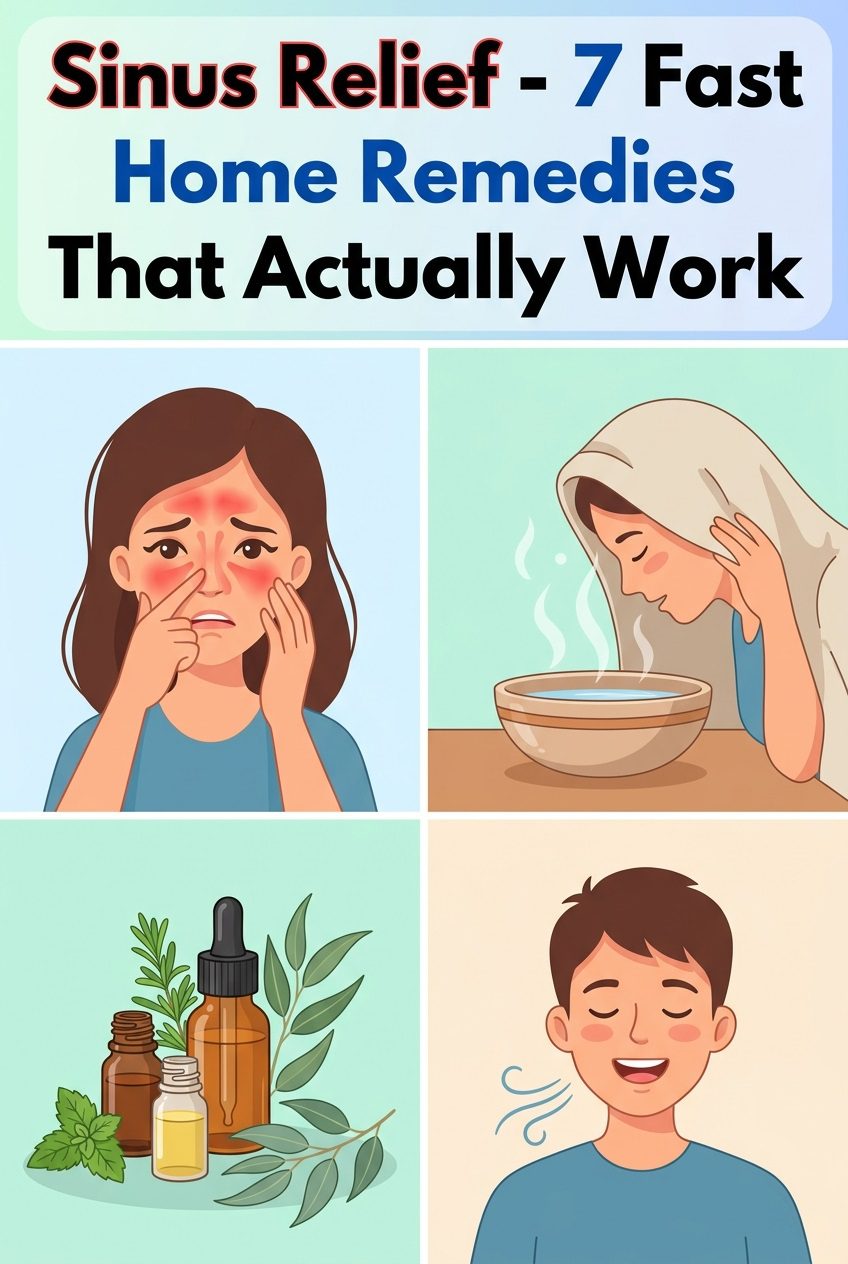
Sinus Relief: 7 Fast Home Remedies to Clear Congestion and Drain Pressure
Sinus relief cannot come fast enough when your head feels like it is full of concrete. Whether you are dealing with a sinus infection, seasonal allergies, or stubborn congestion that won’t budge, these seven natural remedies work fast — no prescription needed. From drainage massage to a simple saline rinse recipe, each method targets a different cause of sinus pressure and can be done at home in minutes.
Why sinus relief at home works
The sinuses are air-filled cavities in the skull that drain into the nasal passages. When they become inflamed from infection, allergies, or dry air, mucus builds up and creates the painful pressure most people recognize immediately. Most cases of acute sinus congestion do not require antibiotics — the inflammation and blockage respond well to heat, moisture, physical drainage techniques, and natural anti-inflammatories that are proven to work.
Sinus relief pressure points
Applying firm pressure to specific facial points stimulates drainage and reduces congestion within minutes. Press both index fingers firmly on the inner corners of your eyebrows and hold for 30 seconds. Then move to the sides of your nostrils and apply firm circular pressure for 30 seconds. Finally, press the area just below your cheekbones in line with your pupils and hold for 30 seconds. Repeat the sequence three times. Most people feel their sinuses begin to drain within five minutes.
How often to use pressure points
Repeat the pressure point sequence every two to three hours during acute congestion. It is completely safe to do as often as needed and provides cumulative relief throughout the day.
7 home remedies for fast sinus relief
1. Steam inhalation for sinus relief
Breathing warm steam loosens thick mucus, reduces nasal inflammation, and provides immediate congestion relief. Boil water, pour into a bowl, drape a towel over your head, and breathe deeply for five to ten minutes. Add three to four drops of eucalyptus oil for a powerful decongestant effect — eucalyptol is clinically shown to reduce sinus inflammation and improve drainage significantly.
2. Saline sinus rinse recipe
A saline rinse physically flushes mucus, allergens, and bacteria from the nasal passages — providing relief that nothing else matches for speed and thoroughness. Mix one teaspoon of non-iodized salt and half a teaspoon of baking soda in 250ml of warm distilled or boiled water. Use a neti pot or squeeze bottle to gently irrigate each nostril. Lean over a sink, tilt your head sideways, and allow the solution to flow in one nostril and out the other. Rinse once or twice daily during congestion.
3. Sinus drainage massage
Place both index fingers at the bridge of your nose. Using firm downward strokes, massage from the bridge down toward the nostrils. Then use your thumbs to massage under the cheekbones in outward sweeping motions toward the ears. Finally, massage gently behind the ears and down the neck to the collarbone — this moves lymphatic fluid away from the sinuses and encourages drainage. Do this for two to three minutes several times a day.
Quick tip: Stay well hydrated during sinus congestion. Drinking plenty of water thins mucus secretions and makes drainage significantly easier. Avoid caffeine and alcohol — both cause dehydration that thickens mucus and worsens congestion.
4. Warm compress on the face
Soak a clean cloth in hot water, wring it out, and place it over your nose and forehead for five to ten minutes. The warmth dilates blood vessels, reduces inflammation, and softens thickened mucus so it drains more easily. Repeat as often as needed throughout the day — it is one of the safest and most soothing immediate remedies for sinus headache and facial pressure.
5. Ginger and turmeric tea
Both ginger and turmeric are powerful natural anti-inflammatories that reduce sinus swelling from the inside out. Steep one teaspoon of freshly grated ginger and half a teaspoon of turmeric in hot water for five minutes. Add honey and lemon. Drink two to three cups daily during acute congestion. The combination reduces nasal inflammation, thins mucus, and supports immune function simultaneously.
6. Elevate your head while sleeping
Lying flat allows mucus to pool in the sinuses, worsening pressure and pain during the night. Elevating your head with an extra pillow or a wedge pillow encourages gravity to assist drainage, reduces morning congestion, and helps you breathe more comfortably through the night. Even a slight elevation of 15-20 degrees makes a noticeable difference.
7. Humidifier with eucalyptus oil
Dry air thickens mucus and irritates the nasal lining, making congestion worse. A cool-mist humidifier keeps bedroom air moist and significantly reduces overnight sinus irritation. Add five drops of eucalyptus essential oil to the water — the vapor carries eucalyptol directly to the nasal passages throughout the night, providing gentle continuous decongestant relief while you sleep.
Sinus relief — when to see a doctor
Most sinus congestion resolves within seven to ten days with home treatment. See a doctor if symptoms last longer than ten days, fever exceeds 38.5°C, pain is severe or one-sided, vision changes occur, or a stiff neck develops — these may indicate a bacterial infection or more serious condition requiring medical treatment.
Best combination for fastest relief
For fastest results, combine steam inhalation with the pressure point sequence immediately after. Follow with the saline rinse 30 minutes later. Use the warm compress for sinus headache pain as needed throughout the day. This three-step combination addresses all the main mechanisms of sinus congestion simultaneously.
Sinus congestion is miserable — but it does not have to last. Start with steam inhalation and pressure points for immediate relief, add the saline rinse twice daily, and let the humidifier work overnight. Most people feel significantly better within 24-48 hours using this routine. For chronic or recurring sinus issues, speak with your doctor to rule out underlying causes like allergies or structural nasal problems.