10 Signs You Are Not Drinking Enough Water and How to Fix It
Most people are not drinking enough water – and most do not realize it because the signs are easy to dismiss as stress, aging, or other causes. Furthermore, thirst is actually a late indicator of dehydration. By the time you feel thirsty, your body is already running on a fluid deficit. Here are ten signs your body is asking for more water right now.
Why not drinking enough water affects everything
The human body is around 60% water. Every major function – from transporting nutrients and regulating temperature to lubricating joints and flushing waste – depends on adequate hydration. Consequently, even mild dehydration of 1-2% body weight disrupts multiple body systems simultaneously.
Moreover, most adults need between 2 and 2.5 liters of water daily – more during hot weather, exercise, illness, or pregnancy. Coffee, tea, and water-rich foods count toward this total, but sugary drinks and alcohol actively dehydrate the body further.
Not drinking enough water – the signs most people miss
Many dehydration signs are so common that people accept them as normal – headaches, afternoon energy slumps, dry skin, and poor concentration. Furthermore, these symptoms disappear remarkably quickly when hydration is restored, which is the clearest evidence they were water-related in the first place.
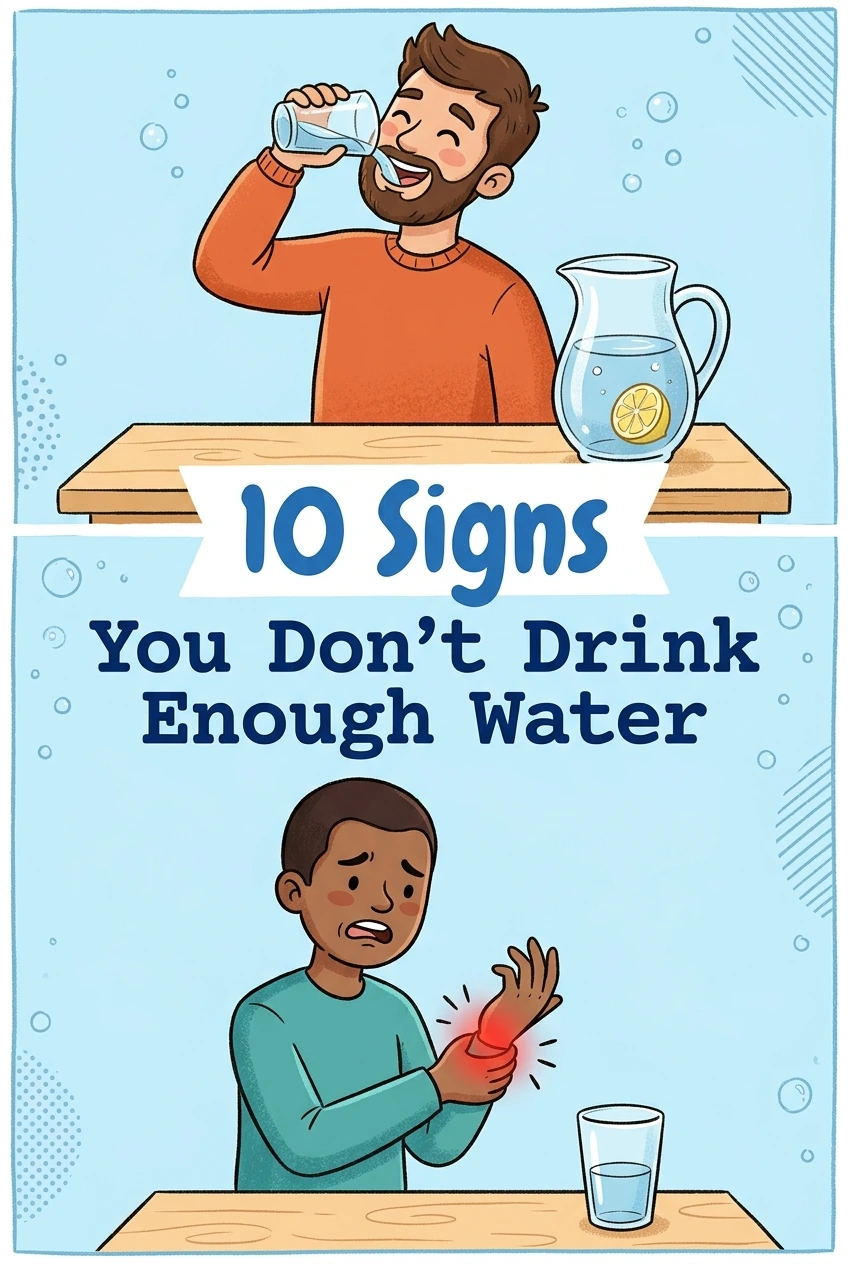
10 signs you need to drink more water
1 to 5 – the most common signals
- Dark yellow urine. Urine color is the most reliable real-time hydration indicator. Pale straw yellow means well hydrated. Dark yellow or amber means dehydrated. Consequently, checking urine color is the easiest daily hydration check available – no tools required.
2. Persistent headaches. Dehydration causes the brain to temporarily shrink away from the skull, triggering pain receptors and producing a characteristic dull headache that often appears in the afternoon. Furthermore, most tension headaches respond to a large glass of water within 20-30 minutes.
3. Fatigue and low energy. Water is essential for producing energy at the cellular level. Even mild dehydration reduces blood volume, forcing the heart to work harder to circulate oxygen – causing that familiar afternoon slump that coffee only temporarily masks.
4. Brain fog and poor concentration. The brain is 75% water. Moreover, research shows that just 1% dehydration measurably impairs working memory, attention, and processing speed – effects that most people attribute to stress or poor sleep.
5. Dry mouth and bad breath. Saliva production requires adequate hydration. Additionally, reduced saliva allows bacteria to multiply in the mouth more rapidly – which is the primary cause of dehydration-related bad breath.
Quick check: Pinch the skin on the back of your hand and release. Consequently, if it snaps back immediately you are well hydrated. If it takes more than a second to return, you need more water. This skin turgor test is one of the fastest dehydration checks available.
6 to 10 – signs that are often overlooked
- Dry or dull skin. Skin is the body’s largest organ and one of the last to receive water when supplies are low. Consequently, chronic dehydration produces dullness, flakiness, and increased fine line visibility that no topical moisturizer can fully compensate for.
7. Constipation and digestive issues. Water is essential for moving food through the digestive tract and softening stool. Furthermore, the colon absorbs water from food waste – when intake is low, it pulls more water from stools, causing hard, difficult-to-pass bowel movements.
8. Joint pain and stiffness. Cartilage – the cushioning tissue in joints – is around 80% water. Moreover, chronic dehydration reduces its shock-absorbing capacity, contributing to joint pain and stiffness, particularly in the knees and hips.
9. Frequent sugar and food cravings. The liver requires water to release glycogen for energy. When dehydrated, the body interprets the drop in available energy as hunger – particularly cravings for sweet or high-carbohydrate foods. Additionally, drinking water before reaching for a snack resolves these cravings more often than people expect.
10. Dizziness and lightheadedness. Dehydration reduces blood volume and blood pressure, particularly when standing up quickly. Consequently, the brief dizziness many people experience on rising – often dismissed as a normal quirk – is frequently a hydration issue.
How to start drinking more water consistently
Knowing you need more water and actually drinking it are two different challenges. These habits make consistent hydration effortless.
Daily hydration habits that work
Drink 500ml immediately on waking. The body loses water overnight through breathing and sweating. Furthermore, starting the day with a large glass before anything else establishes hydration before the deficit builds.
Drink a glass before each meal. This habit alone adds around 750ml daily without any extra thought. Moreover, it reduces hunger and supports digestion simultaneously.
Keep water visible. A water bottle on your desk, a glass on the kitchen counter, and a bottle in your bag all serve as visual reminders. Consequently, out of sight genuinely means out of mind when it comes to hydration.
Add flavor naturally. Sliced lemon, cucumber, mint, or berries make water more appealing without adding sugar. Additionally, herbal teas count toward daily water intake.
How much water is enough
The widely repeated “8 glasses a day” rule is a reasonable starting point but individual needs vary significantly.
Factors that increase water needs
Exercise. Add 500ml to 1 liter for every hour of moderate exercise.
Hot weather. Increase intake by at least 500ml on warm days. Furthermore, air conditioning also dries the air and increases fluid loss through breathing.
Illness. Fever, vomiting, and diarrhea dramatically increase water loss. Consequently, increase intake significantly during any illness.
Pregnancy and breastfeeding. Additionally, both increase daily water needs by 300-700ml above baseline requirements.
The simplest hydration goal
Aim for pale straw-colored urine throughout the day. Moreover, this single observable goal is more reliable than counting glasses because it accounts for all the individual variables that affect water needs.
If you recognized three or more signs from this list, start with a simple habit – drink 500ml of water right now, then another glass before your next meal. Furthermore, keep a water bottle visible throughout the day and check your urine color every few hours as a guide. Most dehydration symptoms improve within 24-48 hours of consistent adequate intake.